President’s House Site, INHP
back to PAF HOME
back to Project Report Index
back to Archaeological Sites of Interest
——————————————————————————————————-
A note on Trump Censorship of the President’s House Site:
With the exhibits at the President’s House Site now censored by the Trump administration (as of January 22nd, 2026), it is worth remembering both why the site is important to the understanding of our shared past and, consequently, why the people of Philadelphia fought so hard to have the full and true story of the site told. Now is the time for people to consider whether they are willing to let the lessons this site has to teach us be erased, effaced, sanitized, and suppressed.
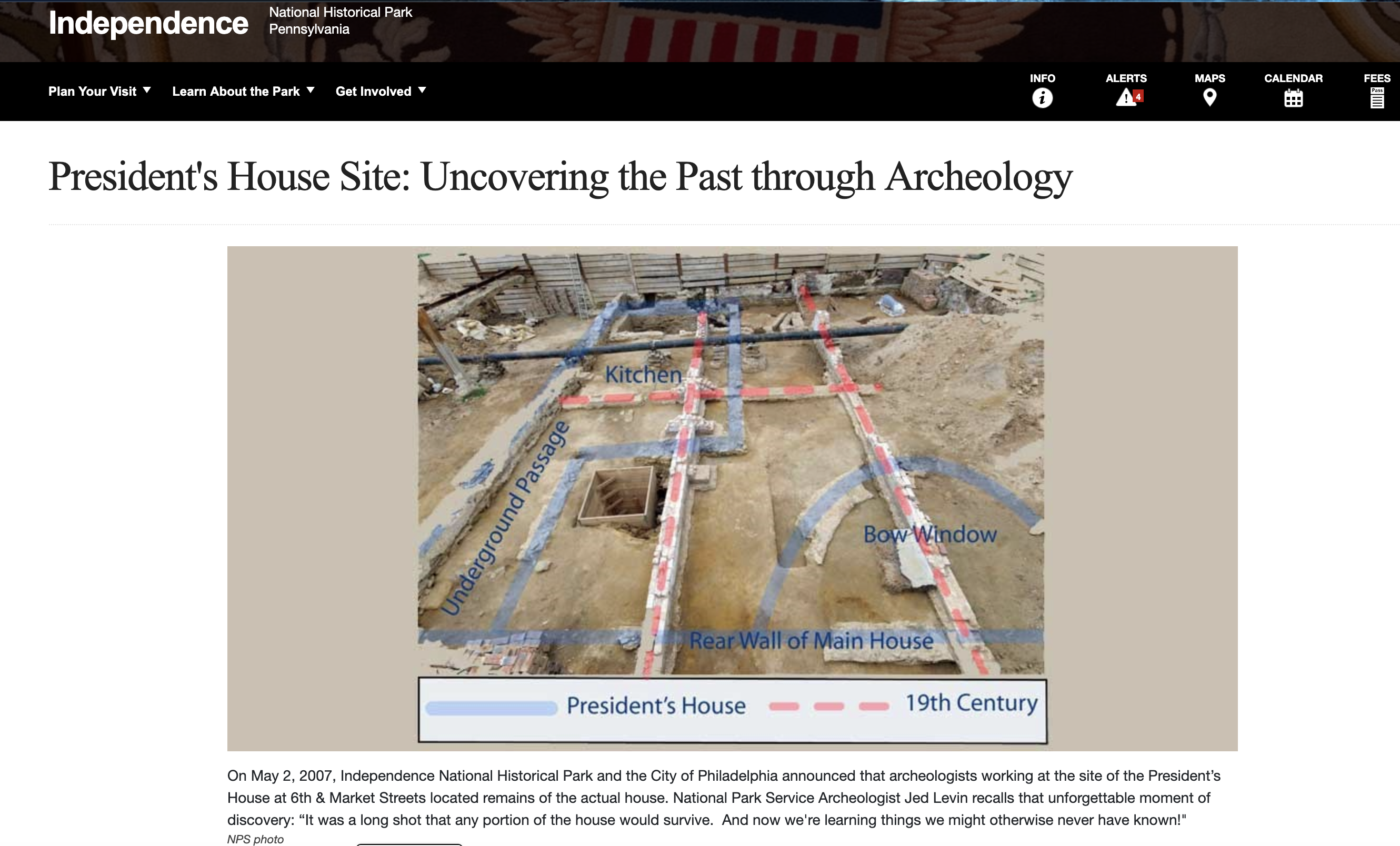
The President’s Executive Order led to removal of signage that identifies and interprets for visitors the archaeologically discovered network of masonry walls and foundations of the first Executive Mansion. This includes Washington’s ‘bow window’ addition to the house (the precursor to the ‘oval’ office) and, located just six feet away, the foundations of the detached kitchen which were the domain of Hercules, Washington’s enslaved chef — the juxtaposition, in stone, of freedom and slavery at the birth of the nation. Also unidentifiable due to removal of signage are the foundations for the walls of an underground passageway that leads from the main house to the kitchen, which kept enslaved people and hired and indentured servants out of view, testifying to the strict hierarchical nature of the 18th century American social landscape.
Also now erased is the accompanying interpretative signage documenting the public’s successful insistence on, and involvement with, the 2007 excavation. That public involvement was a unique exploration in community history and national heritage –but more importantly, it exemplified and demonstrated the importance of engaged citizenship in our Democracy. Specifically, ATAC and other community stakeholders used their freedom of assembly, freedom of the press, and freedom of speech rights to protest their suppressed history and employed their rights of the freedom to petition to direct action by their elected officials. By demanding a say in what was to be done at the site, these activists deployed rights codified in the Constitution, a document debated and signed in nearby Independence Hall, and its amendments—rights denied to their metaphorical, and in many cases, actual ancestors. In doing so, these engaged citizens moved the U.S. government and helped to transform the nation’s historical narrative–the history we tell ourselves about ourselves.
Without the signage referencing the public involvement, visitors are no longer aware that they are standing in the exact spot where the first electorate would come to see their first elected president, and that they are only standing at this spot today because a concerned group of citizens used their rights to make the government address the fact that the national story presented at Independence Park left their history out.
The President’s House Site has proven to be as important for racial negotiations about contemporary America as it is about the past. The excavations would not have occurred if it weren’t for the public outcry, and the public’s response to the resulting archeological findings, in turn, reshaped the proposed design of the commemoration that ultimately rose on the site to display the house ruins. Now, both the site’s 1790’s history, and its role in shaping 21st century history faces erasure through Trump’s ‘Restoring Truth and Sanity to American History’ order, an echo of Project 2025’s goals of promoting a celebratory national narrative that erases uncomfortable historical truths.
The connection between past and present resonates unusually strongly at the President’s House Site because of its location within Independence National Historical Park, a place that functions as a veritable shrine to American democracy. the President’s House Site clearly demonstrates the vital role that archeology, Independence Park, and the City of Philadelphia have to play in exploring the nation’s past racial landscape and addressing race and heritage concerns in contemporary America.
At this point, it is particularly important that the public have truthful and accurate information about the site, its meaning, and how and why a public installation was created on the site. There are links below that will take you to the archaeology report on the excavations at the site and to resources about the site and the controversies surrounding it.
Read the President’s House report:
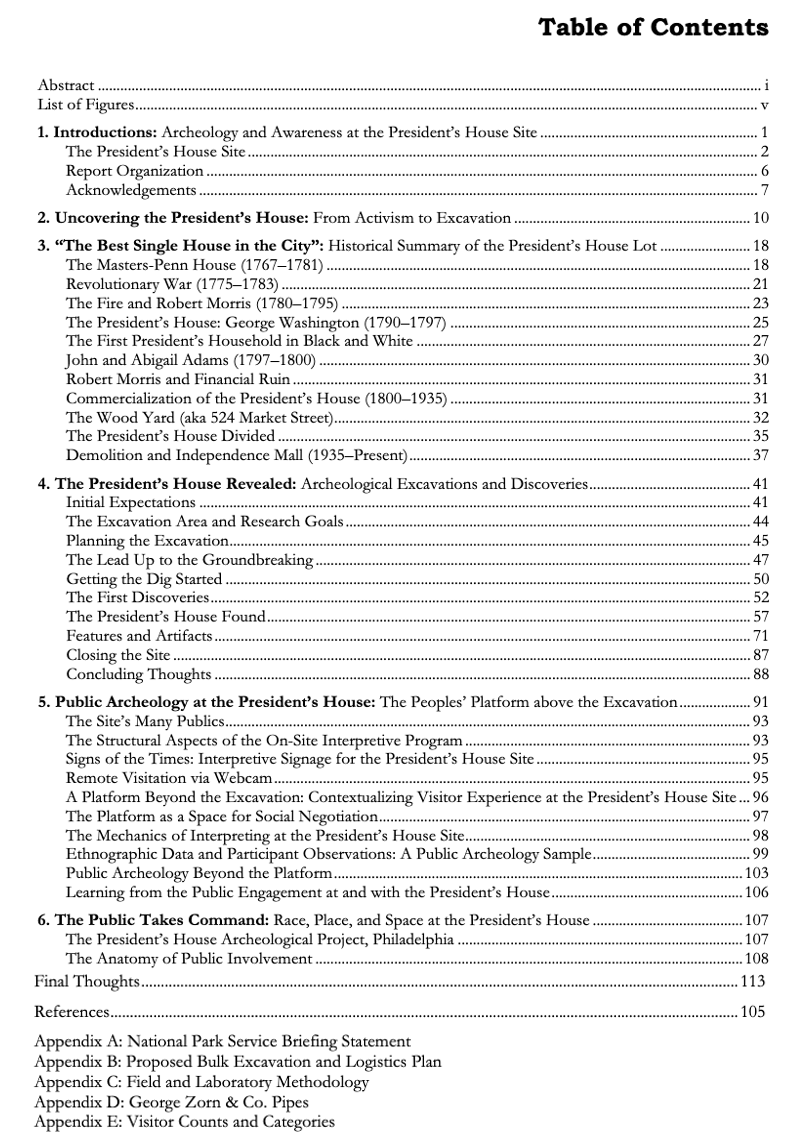
The Archeology of Freedom and Slavery: Excavations at the President’s House Site in Philadelphia Prepared for the National Park Service and City of Philadelphia by URS Corporation (Douglas Mooney, Ingrid Wuebber, and Cheryl Janifer LaRoche), National Park Service (Jed Levin), and Independence National Historical Park ([Volunteers in Parks] Patrice L. Jeppson, Joe Roberts, and Karen Lind Brauer). Nov. 2009, Revised Sept. 2023.
President’s House Site- An OVERVIEW
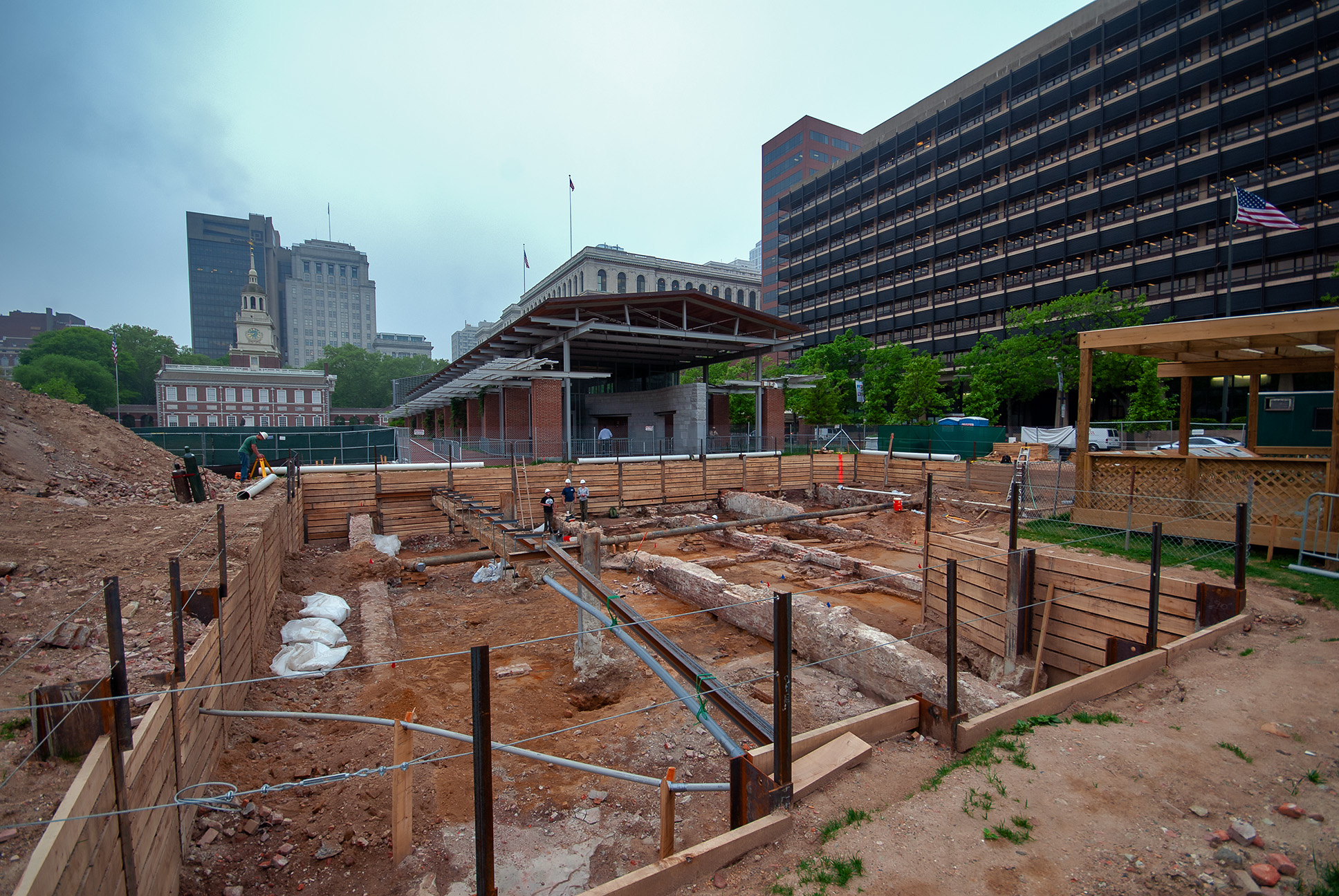
During the last decade of the 18th century (1790-1800), Philadelphia, Pennsylvania served as the capital of the United States of America. During this period, a property in the center of the city was rented to serve as the executive residence and office—the equivalent of today’s White House. Most of President George Washington’s first term of office, and all of his second term, was spent at this property which was comprised of a grand townhouse with several outbuildings, including a detached kitchen, stable, smoke house, and an ice house. President John Adams served three of his four years as President here as well, before becoming the first President to occupy what is now known as the ‘White House’ in Washington D.C.
Historical records show that President Washington brought nine enslaved persons from his private plantation home in the Commonwealth of Virginia to the new Executive Mansion (‘the people’s house’.) These individuals—Austin, Paris, Hercules, Christopher Shields, Richmond, Giles, Oney Judge, Moll, and Joe—lived and labored within the Executive mansion structures. Washington had the existing property altered to accommodate them as well as more than a dozen indentured and free laborers, members of his family, and members of his staff. President Adams, who served after Washington, did not own enslaved people.
An archaeological excavation conducted in the late winter through the late summer of 2007 explored this site. The project was undertaken as a partnership between the National Park Service and the City of Philadelphia in response to public demands that the planned development on the site—a new exhibit building to house the Liberty Bell—include a full discussion of the fact that President Washington kept enslaved people in the Executive Mansion during his residency.
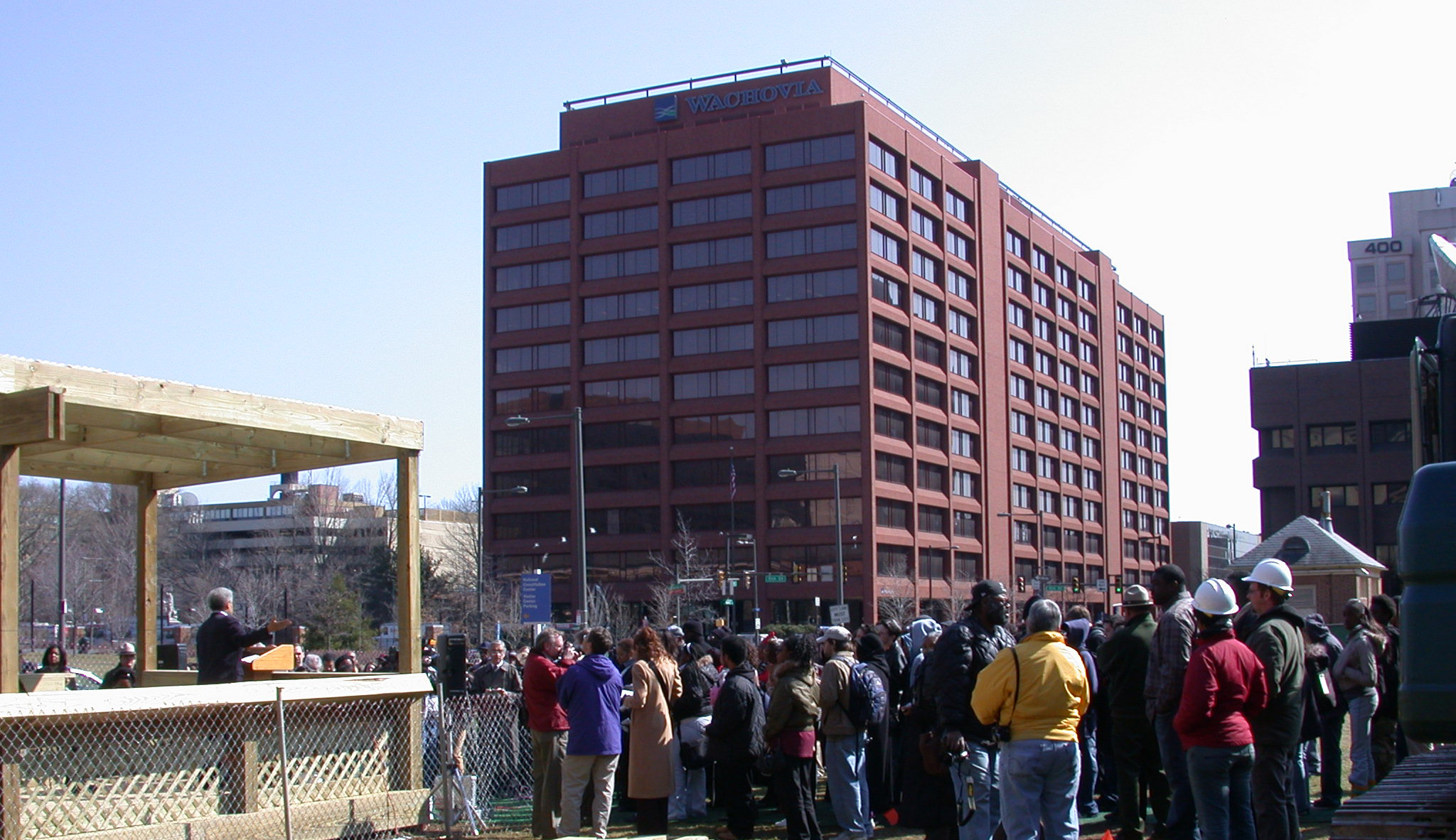
Excavation of the site began on March 21st, 2007, following a public opening ceremony featuring then mayor John F. Street, and concluded with a closing ceremony on July 31st, 2007, after which the site was reburied (resealed). The extraordinary public interest in the site was evident from the inception of the project. A public viewing platform, open to the public whenever active excavation was underway, attracted large crowds. Over a quarter of a million people visited the site during the archaeological dig. The public’s interest was mirrored in the media. Coverage, both print and electronic, was featured in outlets from across the country and the world.
Archaeological findings at the site yielded surprises about the house and helped elucidate what life was like for both the enslaved and the free members of the household. The surviving structural remains of the house and its outbuildings exceeded expectations and revealed details of the property that, despite extensive historical research, were previously unknown. Once exposed, the network of masonry walls and foundations painted a picture of the strict hierarchical nature of 18th century America. Against this emerging backdrop, the project’s archaeologists, including both staff and volunteers, explained the finds and their importance to the public in real-time, as they were uncovered. This ad hock interpretation of site features was contextualized with discussion of what was known about the lives and activities of those who had lived on the site.
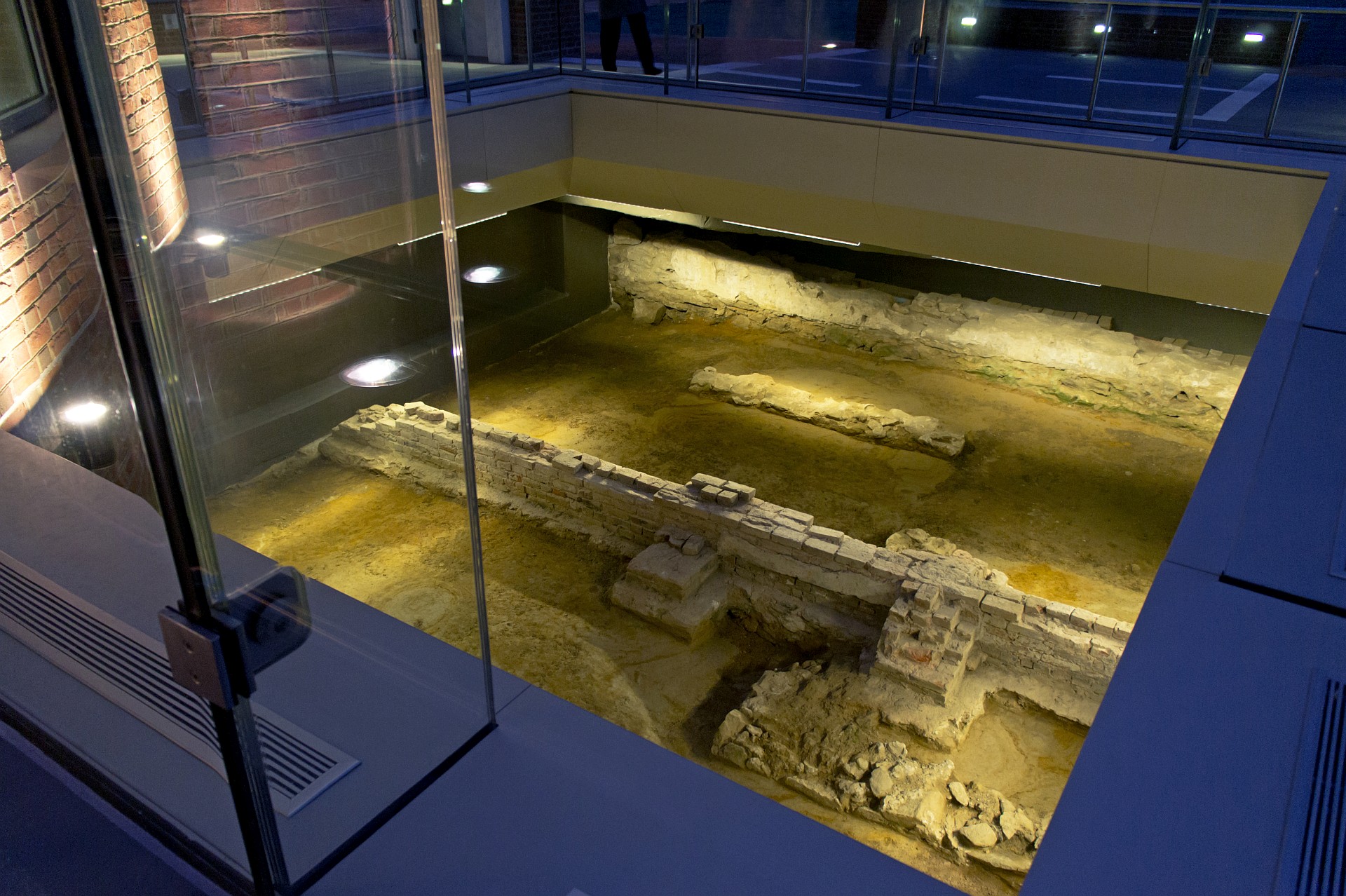
Today, adjacent to the pavilion housing the Liberty Bell and interpretation of its history and significance, is The President’s House: Freedom and Slavery in the Making of a New Nation —an outdoor exhibit designed to examine the paradox between slavery and freedom in the founding of the nation. Open air exhibits [removed by Executive Order in January 2026] tell the story of the site and its inhabitants, with a focus on the nine enslaved people brought to the site during George Washington’s tenure. Some of the most significant finds from the 2007 archaeological excavation are preserved for viewing by the public under a glass pavilion on the site. This last feature was added to the site design following public insistence that the physical remains of the site revealed during the excavations that had so galvanized public interest not be completely reburied and, again, rendered invisible. Aside from the powerful story they tell, these preserved and visible physical remains stand as testament to the power of archaeology to connect people with their past.
Click here to read the report: The Archeology of Freedom and Slavery: Excavations at the President’s House Site in Philadelphia. Prepared for National Park Service and City of Philadelphia, by URS Corporation (Douglas Mooney, Ingrid Wuebber, and Cheryl Janifer LaRoche), National Park Service (Jed Levin), and Independence National Historical Park (Patrice L. Jeppson, Joe Roberts, and Karen Lind Brauer). November 2009, Revised September 2023.
Inventory of artifacts recovered during the excavation: Presidents House Artifact Inventory (PDF) Or Presidents House Artifact Inventory (Excel)
Additional Information about the President’s House Site from Independence National Historical Park (US Dept. of the Interior, National Park Service):
Trump’s Censorship of the President’s House/Slavery Memorial — Some Published Sources
- President Trump’s Executive Order No. 14523: Restoring Truth and Sanity To American History, March 27, 2025
- Department of Interior Secretary’s Order 3431- Restoring Truth and Sanity to American History
- Read the News Coverage… (current as of Jan. 24, 2026)
President’s House Controversy & Archeology: Some Key Published Sources (INHP, Updated: 11/2016)
- Visiting the President’s House Site
- History of the President’s House Site
- President’s House Site: Presidents Washington and Adams
- President’s House Site: Enslaved people in the Washington Household
- Ona Judge Escapes to Freedom
- President’s House Site: Uncovering the Past through Archeology
- Memory and Truth: Excavating “Liberty” at the President’s House
- INHP President’s House Photo Gallery
- President’s House Site, Independence National Historical Park, Philadelphia PA
Selected Information from Multiple Sources:
- The President’s House in Philadelphia at UShistory.org. Extensive information chronicling the entirety of the President’s House excavation, including writings by Edward Lawler, Jr. The affiliated Facebook page has a vast range of pictures of the site.
- “The President’s House in Philadelphia: The Rediscovery of a Lost Landmark”, in The Pennsylvania Magazine of History and Biography (January 2002), and the revised article, “The President’s House Revisited”, in The Pennsylvania Magazine of History and Biography (2005 CXXIX:317-410), –both by Edward Lawler, Jr.–can be read here at UShistory.org
- John Edward Dowell, Contemporary American Artist, Photographs of the President’s House Archeological Site. A joint project of the Office of the Mayor, City of Philadelphia and Independence National Historical Park.
- Michael Coard YouTube post by W. Kaluza: “Michael Coard on Slaves in Philly’s President’s House” June 28, 2010.
- Avenging the Ancestors Coalition ‘What Have We Accomplished Regarding The Slavery Memorial/President’s House?‘ (scroll toward the bottom of the page)
- Kelly/Maiello, The President’s House, Freedom and Slavery in the Making of a New Nation
Association for Public Art, The President’s House: Freedom and Slavery in the Making of a New Nation, by Emanuel Kelly, Kelly/Maiello Architects, Lorene Cary, Louis Massia - Visit Philadelphia President’s House page (visitphilly.com), President’s House Ribbon Cutting
Other Research Reporting about the President’s House Site…
by Patrice Jeppson